
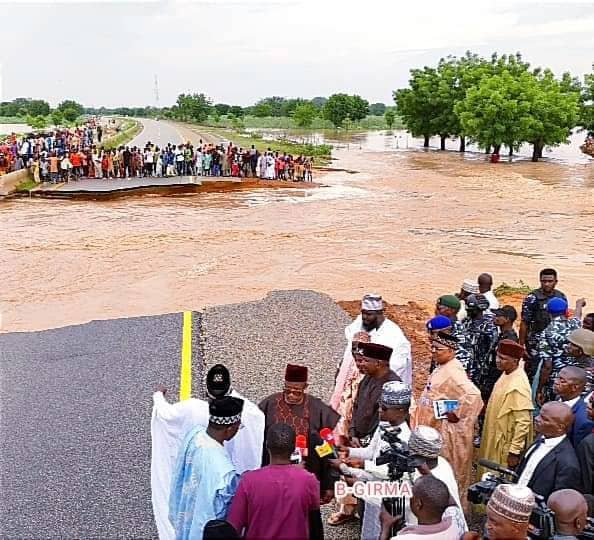
In the latest catastrophe to strike Nigeria, relentless flooding has wreaked havoc across the country, claiming nearly 200 lives and displacing thousands from their homes. This disaster, which has battered 29 of Nigeria’s 36 states, not only underscores the critical issues of infrastructure and disaster preparedness but also raises grave concerns about the nation’s food security. Gom Mirian, reports.
Floods Kill Scores, Destroy Farms, Heighten Food Security in Nigeria

Weeks of relentless flooding have wreaked havoc across 29 states in Nigeria, leaving a trail of destruction in its wake. The floods, which began in June and surged through August attributed to poor infrastructure and poorly maintained dams, have resulted in the tragic loss of 185 lives and the displacement of over 200,000 people, according to the National Emergency Management Agency (NEMA). The situation has prompted frantic evacuation efforts to move hundreds of thousands to makeshift shelters, as the floodwaters continue to rise unabated.
Recent data from the National Emergency Operations Center (NEOC) reveals a grim reality of over 115,000 hectares of farmlands being submerged by the floodwaters, further compounding the challenges faced by farmers in the affected regions. States like Bauchi, Taraba, Jigawa, Niger, and Sokoto have borne the brunt of the devastation, with vast swathes of agricultural land rendered unproductive, dealing a severe blow to the country’s food production capacity.


The devastating floods come at a time of already heightened food shortages and soaring food inflation, with the National Bureau of Statistics, (NBS) putting food inflation at over 40 per cent. As a result, Nigeria has the highest number of hungry people in the world, with 32 million about 10% of the global burden facing acute hunger in the country, according to the U.N. food agency.
Nigeria experiences annual flooding, often as a result of a failure to follow environmental guidelines and inadequate infrastructure. However, unlike previous years when heavier rainfall was to blame, this year’s floods are primarily the result of human activities, according to the Nigerian Meteorological Agency.
Ibrahim Wasiu Adeniyi, head of the central forecasting unit, highlights the indiscriminate dumping of refuse and unauthorised construction along waterways as key factors exacerbating the flooding crisis, emphasising the urgent need for sustainable environmental practices to mitigate future disasters. “What we are doing is causing this climate change so there is a shift from the normal,” he said.
Farmers in Despair
The flooding has severely impacted agriculture, which is vital to Nigeria’s economy and food security. In northern states, which are crucial for the country’s harvests, the floods have destroyed an estimated 107,000 hectares of farmland. Many farmers, already struggling with economic hardships and violence, now face the additional burden of flood-induced losses.
Abdullahi Gummi, a farmer from Zamfara, shared his anguish: “We invested around 300,000 naira ($188) into planting, but now everything is gone. Our farmlands, which were our main source of income, have been destroyed.”
Expressing his sentiments, Abubakar, another farmer from the Katagum local government area of Bauchi state, shared with Africa Health Report, AHR the profound impact of the recent floods on his farming endeavours.
Reflecting on his two decades of experience in farming, he lamented, “This has been the worst floods I have witnessed in the last twenty years in the state.” Abubakar recounted how in previous years, he would typically endure some losses on his farm but could salvage a portion of the harvest to sustain his family.
However, he expressed the devastating reality of this year’s floods, stating, “This time, I lost everything to flooding.” Looking towards the future with a glimmer of hope, Abubakar emphasised the importance of government intervention in restoring livelihoods, expressing, “If the government can find means of restoring our livelihoods, I will be happy.”
In an exclusive interview with AHR, Haruna Mairiga, the ES of the Jigawa State Emergency Management Authority, (SEMA) services in Jigawa—one of the worst-hit states, which has recorded 39 deaths, described the situation as “devastating.”
Mairiga explained, “The scale of the damage is unprecedented. We are using public buildings and schools as shelters for displaced individuals, but the scale of the need is overwhelming.”
Addressing the flooding situation in the state, he provided detailed statistics, stating, “A total of 175 communities have been impacted, with 8,487 houses affected, 55,973 individuals affected, 10,947 farmlands destroyed spanning 12,423 hectares, and 15,678 individuals seeking refuge in IDP camps as of August 28, 2024.”
Rising Food Prices and Inflation
The flooding has exacerbated an already dire food situation. The National Bureau of Statistics (NBS) reported that food inflation has surged to over 40%. The Central Bank of Nigeria’s recent survey predicts that households will spend 54.9% of their income on food in the coming months, a reflection of the worsening economic strain.
Agriculture Minister Abubakar Kyari assured the public that measures are in place to tackle the crisis, including a plan for a bumper harvest by the end of the year. “We are expecting a bumper harvest around October-November,” Kyari said. “The government is ramping up support for farmers, including the provision of tractors and fertilizers.”
Challenges and Solutions
Nigeria’s floods are a stark reminder of systemic issues including poor infrastructure and inadequate disaster management. Ibrahim Wasiu Adeniyi, head of the central forecasting unit, noted that “human activities such as indiscriminate waste dumping and unapproved construction along waterways have exacerbated the situation.”
In response, the government has suspended duties on essential food imports and is investing in agricultural mechanisation. However, experts argue that these measures may be too little, too late. “We need comprehensive disaster management strategies and better infrastructure to prevent such catastrophes,” said Manzo Ezekiel, spokesperson for the disaster response agency.
On Saturday, the federal government also launched the sales of 30,000 metric tons of milled rice at a subsidized price of N40,000 per 50kg bag with proof of the National Identification Number, aiming to ease the economic burden on civil servants and other Nigerians.
International Comparison
While flooding is not unique to Nigeria, the scale of the current disaster and its impact on food security highlight a critical difference in response and accountability. In contrast to countries like North Korea, where severe flooding led to harsh penalties for officials, Nigeria’s recurring floods often see a cycle of promises but little effective action.
Looking Ahead
The floods have highlighted Nigeria’s vulnerabilities and the urgent need for long-term solutions. With the economic and social impact of the floods continuing to unfold, the nation’s ability to recover and adapt will be crucial in determining its future stability and prosperity.
The combination of natural disasters, economic strain, and poor infrastructure has plunged Nigeria into a critical situation that demands immediate and sustained intervention. As the waters recede and the country grapples with recovery, the need for comprehensive strategies to address immediate relief and long-term resilience has never been more apparent.
About the Author