At the corner of most streets in Nigeria, you can be sure to find a food vendor catering to the hunger needs of the residents and workers in the area. However, many of them engage in food preparation practices that are detrimental to the health of their customers, writes Gom Mirian.
Food is an essential aspect of human life, as it is a source of nourishment for the body. Its composition, preparation and combination are determinants of how healthy the consumer will be. Hence, food processing or preparation is very important.
In Abuja, the Federal Capital Territory (FCT) in Nigeria, food vendors, restaurants and markets where foodstuffs are sold can be found in many locations; from street corners and makeshift structures in the low income areas to fancy buildings in the high row areas. However, while the high numbers talk about the brighter side of the economics of food business, the unsanitary conditions in which these foods are prepared for consumption is a dark side.

Every government has health agencies that regulate food business to ensure that they are prepared with the hygiene standards to prevent foodborne illnesses. Sadly, it is disturbing to note that a significant number of food vendors and restaurants within the FCT do not operate in accordance with standard food hygiene practices, and without penalties.
The inspection arm of the FCT Abuja Environmental Protection Board (AEPB) has reported many cases of food contamination and poor hygiene practices in many food establishments in the city. Some of the reported violations include improper storage of food, handling of cooked and uncooked foods with bare hands, inadequate ventilation in the kitchen and lack of proper sanitation facilities.
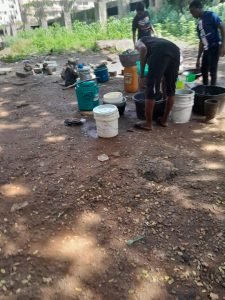
Our correspondent who visited some of the area councils in the Federal Capital Territory (FCT) observed that many food vendors who sell in open spaces use unclean water to wash and clean their utensils and to prepare their food. This is particularly problematic when water sources are contaminated with high levels of bacteria, exposing their customers to illnesses.
Mr. Nicholas Mase, a businessman who resides in the Kuje Area Council of FCT, urged the agencies saddled with the responsibility of enforcing food hygiene laws to make unauthorised visits to restaurants and eateries to check on and ensure an adequate hygienic cooking environment.
He stated that a good number of restaurants across Nigeria leave much to be desired when it comes to matters of hygiene.
Mase recommended that “government needs to embark on impromptu visits to well-established hotels and restaurants in order to monitor the cooking environment to ensure safety and hygiene of the areas.”
For Mr. Sunday Adeniyi, a construction engineer, he is a living testimony of the adverse effect of consuming unhygienic food from vendors. He said he has treated a variety of illnesses brought on by food poisoning as a result of patronising eateries.

“I finish work late and my family is not situated in Abuja. Therefore, I frequently rely on food sellers, which has caused me to get sick several times, notably with typhoid, and require medical attention for food poisoning,” he told African Health Report (AHR).
Speaking on the subject, Hajiya Aishatu Babankudi, a matron heads Abuja Municipal Area Council (AMAC) Primary Healthcare Centre, Lugbe, said eating unhealthy food and in an unsanitary environment can lead to diseases and infections that could pose a serious risk to the health of an individual.
Babankudi noted that “there is no doubt that the consequences of food sanitation continue to pose a significant health risk to people in the FCT. The effects of these poor healthcare practices include diarrhea, vomiting, and other illnesses that occur as a result of consuming unsafe food. In some cases, food contamination can lead to outbreaks of significant diseases such as typhoid fever, cholera, or even hepatitis A.”
She, therefore, advised customers to avoid eating out as much as possible, cook their own meals with the best ingredients in a hygienic way, or limit their diet to safe foods.
Food safety as one of Nigeria’s biggest challenges
Downtime of employees due to diseases contracted through food prepared under unsanitary conditions leads to economic growth. It also strains healthcare systems by adding additional burdens on the few available resources.

Eating contaminated food is a contributing factor to illnesses that affect an estimated 600 million people worldwide—nearly 1 in 10—as well as the 420 000 deaths and 33 million healthy lives lost each year, a report by the World Health Organisation revealed.
An estimated 48 million cases of foodborne illnesses occur each year in the United States, resulting in approximately 128,000 hospitalisations and 3,000 deaths. Over half of all foodborne disease outbreaks reported to the Centres for Disease Control and Prevention are associated with eating in restaurants or delicatessens.
According to the World Bank, productivity losses associated with food-borne diseases in low and middle-income countries are estimated to cost $95.2 billion per year, and the annual cost of treating food-borne illnesses is estimated at $15 billion, with the overall public health and domestic economic costs of unsafe food at 20 times the trade-related costs for developing countries.
From AHR’s research, the FCT Abuja Environmental Protection Board (AEPB) is the regulatory agency for restaurants and other food vendors. It has the mandate to enforce strict laws to guide food vendors and restaurants to follow food hygiene standards in the FCT
But when our correspondent contacted AEBP to ascertain the level of compliance of food business owners to sanitary standards, our correspondent was met by uncooperating staff.
However, a senior officer in the board identified as Mrs. Kate Ogbonna Ocheze, told our correspondent that AEPB “cannot be everywhere” to inspect restaurants if they are keeping with with sanitary standards because “it is not a spirit.”
She added that it is Nigerians’ “love for poverty” that’s to blame for restaurants operators who have no regard for laid down operation regulations.
Ocheze said: “Nigerians always talk about poverty, so they prefer to eat in such places. The AEPB cannot be everywhere to prevent people from dining in unhygienic locations since it is not a spirit. However, if people stop patronising these food vendors, the they won’t return, and the problem will be resolved.”
The negligence of regulators of restaurants calls for concern. As it is, food establishments do not feel compelled to adhere to food hygiene standards because there is no enforcement of rules.
Foodborne illnesses can be prevented if businesses comply with health regulations and undertake regular preventive measures, leading to an improvement in the city’s food sanitation standards.
About the Author