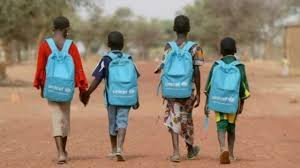
As Nigeria’s school gates creak open this Monday, September 9, marking the start of a new academic session, the air is thick with a sense of foreboding. The nation’s education system, already fragile, now teeters on the brink of collapse. This unsettling shift comes not from educational reforms or policy changes, but from a more sinister force: a dramatic increase in fuel prices. With the cost of living skyrocketing, the economic pressure is forcing parents to make heart-wrenching choices and educators to question their future.
A Crushing Blow to Family Budgets

In Business Central District, the seat of Nigeria’s political power, Ezekiel Audu, a banker, faces a financial dilemma that many parents across the country are grappling with. “I have four children in primary school. Before, their tuition fees and transportation per term used to cost me approximately N1,350,000, which was already a struggle,” Audu explains. “But now, just three days before their resumption, their school informed us that transportation alone has risen to N350,000 per child. Where am I supposed to find that money? My salary is barely enough to cover our basic needs.”
The dramatic spike in transportation costs is emblematic of a broader economic crisis. Audu, forced to withdraw two of his children from school until he can stabilise his finances, is but one example of how the surge in fuel prices is reshaping the educational landscape. “Everything has increased, Tinubu is killing Nigerians, May God help us,” Mr. Audu lamented.
Scrimping and Sacrificing: Parents’ Desperate Measures

The anguish of Nigerian parents extends far beyond mere frustration
In Kubwa, a suburb of Abuja, a mother of three confesses her struggles with palpable distress. “It’s tough,” she says, her voice wavering. “I used to pack eggs, noodles, or sandwiches for my kids, but now I have to scale back. I might just stick with fruits or homemade snacks to keep costs down.”

Priscilla Abang, another concerned parent, echoes this sentiment. “It’s becoming increasingly difficult to juggle school costs and basic household needs,” she laments. The tension between providing quality education and managing escalating living expenses is pushing many parents to their limits.
In the Bwari area council in the FCT, a father of four, Mr. David explained “I used to pay for the school bus for my two children, but as it is, I don’t know how to go about it now because of the fuel prices. I’m thinking of dropping them off myself when going to work, and maybe paying a keke or okada man for the ride home, because I can no longer afford the school bus.”
In Lagos, Mr. Sulaiman Lawal revealed that he had recently transferred his children to a new school, only to discover that the school fees had increased by a staggering 50 per cent.
“The economic situation in the country is really affecting us,” the parent said. “I just changed my children’s school and I was shocked to find out that the school fees had increased by 50 per cent. It’s becoming increasingly difficult for us parents to cope.”
Mr. Lawal also lamented the surge in food prices, which has added to the financial burden. “Food items have become so expensive, and this means I will have to spend more on feeding my children while they are in school,” he said.
He expressed dismay over the hike in school bus fees, which has risen from N350,000 to N750,000. “The school bus fee was initially N350,000 but has now increased to N750,000. This is unacceptable,” he lamented.
Teachers in Crisis: A Profession Under Siege
The repercussions of the fuel price surge are not confined to households alone. Teachers, the bedrock of Nigeria’s education system, also feel the strain.
Saliu, a 34-year-old teacher, a Gwarinpa resident in Abuja, recently resigned from his position at a private school. “It was a nightmare,” he recounts. “Before the fuel price hike, I spent around N15,000 to N20,000 on transportation monthly. After the increase, it shot up to N35,000 to N40,000. I was literally borrowing money just to get to work. My salary was about N70,000. I was working for free.”
Saliu’s resignation is not an isolated incident. Many teachers are leaving the profession due to the unbearable cost of living. “The government keeps saying we should adjust to the new reality,” Saliu adds. “How can I adjust when my salary hasn’t increased in years? I was living from hand to mouth, struggling to make ends meet. I love teaching, but I just couldn’t continue like that.”
The Ripple Effect on Education
The cascading effects of this crisis are deeply concerning
An anonymous head teacher of a private school reveals the painful reality of passing costs onto parents. “There is nothing we can do; that’s the country we find ourselves in,” she explains. “If we don’t adjust our fees according to the rising costs of fuel and other expenses, we risk legal action from parents. We buy fuel, pay staff, and maintain the school—it’s all becoming unsustainable.
Expert Opinions: Analyzing the Fallout
To understand the broader implications of this crisis, Africa Health Report, AHR sought insights from experts. Dr. Mohammed Isah, an economist, offers a sobering perspective. “The increase in fuel prices will undoubtedly affect the economy negatively. The impact on families and their ability to afford education is expected,” he says.
“When people’s income doesn’t increase in line with rising costs, they have no choice but to make difficult decisions, such as resigning from jobs or withdrawing their children from school.”
Dr. Isah advises parents to seek alternative solutions, such as enrolling their children in affordable, nearby schools and negotiating payment plans. However, he acknowledges that immediate relief from the government seems unlikely. “The government can only appeal to the people’s conscience for now. The market forces will determine fuel prices and immediate solutions are not on the horizon.”
Dr. Resaad, an education expert, is not surprised by the exodus of teachers. “I foresaw this scenario,” he says. “If attention is not given to teachers’ welfare, we will see empty classrooms with no teachers willing to stand and teach. Thousands of Nigerian teachers are applying for jobs abroad, and if this continues, our education system will suffer greatly.”
The Teacher Shortage Crisis
A recent report highlights a severe shortage of teachers in Nigeria’s public primary schools, with a deficit of 194,876 teachers. The Universal Basic Education Commission (UBEC) also reports that over 30 per cent of Nigeria’s teaching workforce has left the profession in the past three years. The alarming trend underscores the urgency of addressing this crisis’s underlying economic issues.
Looking Ahead: Navigating the Crisis
As Nigeria grapples with this complex crisis, the future of its education system hangs in the balance. The interplay between rising fuel prices, skyrocketing costs of living, and a shrinking pool of teachers creates a perfect storm threatening to undermine the nation’s educational foundation.
For now, parents like Ezekiel Audu, Priscilla Abang, David and Lawal must navigate this turbulent period with dwindling resources and mounting challenges. Meanwhile, teachers like Saliu and the many who have resigned face an uncertain future, their commitment to education overshadowed by the harsh realities of economic survival.
Amid this turmoil, the Nigerian government faces a critical test: addressing the root causes of this crisis while ensuring that education remains accessible and equitable for all. The road ahead is fraught with challenges, but immediate and effective measures must be taken to safeguard the future of Nigeria’s children and teachers alike.
Additionally reported by Korede Abdullah in Lagos, and Juliet Jacob in Abuja, Nigeria.
About the Author